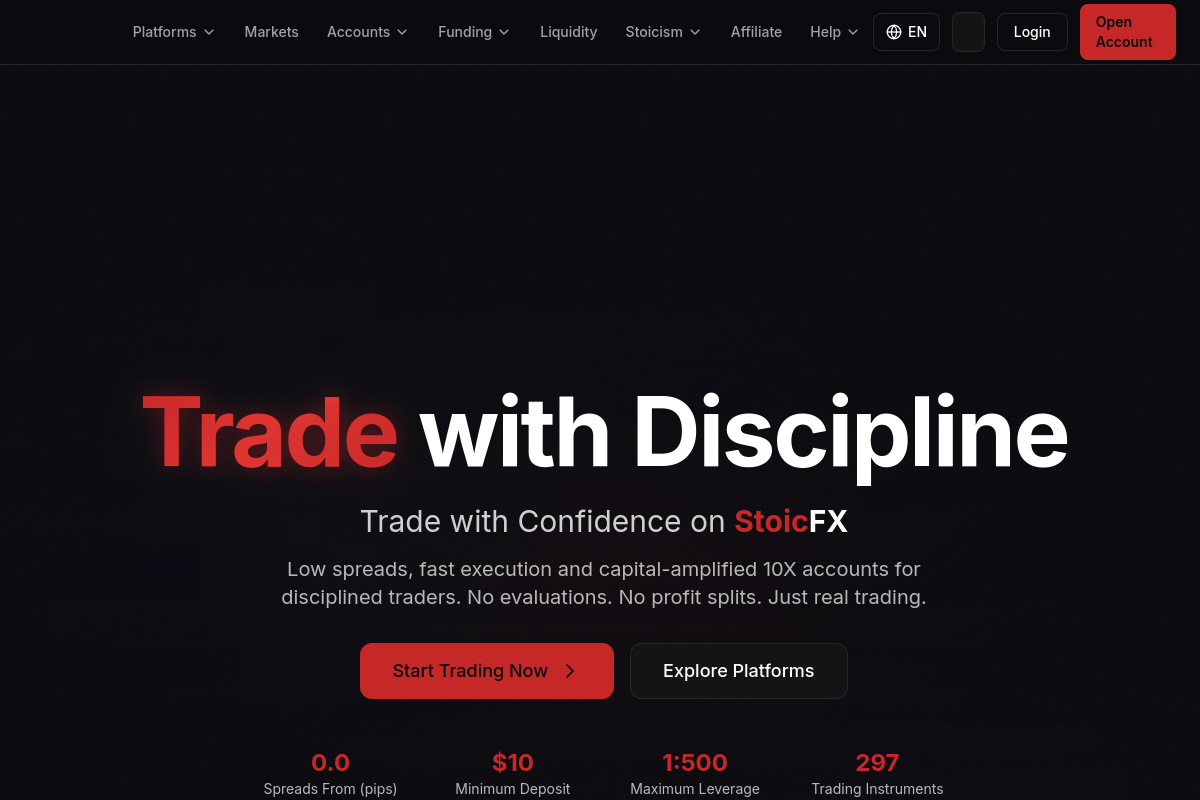
StoicFX.com Review: Unveiling the Truth Behind the Trading Platform
In the rapidly evolving landscape of online finance, the emergence of new brokerage platforms occurs daily. One such platform that has recently gained attention in the digital assets and foreign exchange space is StoicFX.com. As investors seek to diversify their portfolios through Forex, cryptocurrencies, and commodities, the necessity for rigorous due diligence has never been more critical. This comprehensive analysis, conducted from the perspective of a cyber-security expert and seasoned SEO content writer, aims to answer the fundamental question: Is StoicFX.com a legitimate financial service provider or a sophisticated scam?
The digital financial sector is unfortunately rife with entities that leverage professional aesthetics to mask fraudulent intent. These platforms often target retail investors by promising high returns, advanced trading tools, and seamless market access. However, behind the polished user interfaces often lies a web of regulatory evasion and technical red flags. In this investigation, we will dissect every facet of StoicFX.com, from its regulatory standing to its technical infrastructure, to provide a definitive verdict for potential users.
Recover Your Funds From Bitcoin, Forex, Binary, and Crypto Brokers. We Specialize in Cases Over $5000. Their experts are ready to help with tracing your lost funds and guide you toward recovery
The Allure of StoicFX: What They Promise
StoicFX.com positions itself as a premier destination for modern traders. The website markets a variety of financial instruments, including major and minor currency pairs, popular cryptocurrencies like Bitcoin and Ethereum, and traditional assets such as gold and oil. Like many platforms in this niche, StoicFX emphasizes its use of advanced technology, low spreads, and “lightning-fast” execution speeds. These claims are designed to appeal to both novice traders looking for ease of use and experienced traders seeking technical efficiency.
A significant part of their marketing strategy revolves around the concept of “stoic” investing—suggesting a disciplined, emotionless approach to the markets. While this branding is clever, a cyber-security analysis requires looking past the brand’s psychological appeal and focusing on the objective evidence of the platform’s reliability and legality. To determine the legitimacy of StoicFX.com, we must evaluate the “trust signals” that distinguish a regulated broker from an illicit operation.
Regulatory Status: A Critical Oversight
The most important factor in determining the legitimacy of any financial platform is its regulatory status. Legitimate brokers are required to be registered with recognized financial authorities such as the Financial Conduct Authority (FCA) in the United Kingdom, the Australian Securities and Investments Commission (ASIC), or the Securities and Exchange Commission (SEC) in the United States. These bodies enforce strict rules regarding capital requirements, the segregation of client funds, and transparent reporting.
Upon investigating StoicFX.com, there is a glaring absence of verifiable regulatory information. Legitimate firms prominently display their license numbers and the jurisdiction under which they operate in the footer of their website. StoicFX fails to provide a clear regulatory roadmap. Operating without a license in the financial industry is the most significant red flag a platform can exhibit. Without oversight, there is no guarantee that the “trades” occurring on the platform are reaching the real market or that the capital deposited by users is being held securely. In many cases, unregulated platforms act as “market makers” against their own clients, profiting directly from user losses.
Identifying Red Flags: The Cyber-Security Perspective
Beyond the lack of regulation, several other red flags emerge when subjecting StoicFX.com to a technical and structural audit. A cyber-security analyst looks for patterns of behavior and technical configurations that are common among fraudulent sites. Below are the primary concerns identified during our review:
- Anonymity of Ownership: Transparent companies provide detailed information about their executive leadership and physical headquarters. StoicFX.com remains remarkably vague about its corporate structure. There is no verifiable “About Us” section that links the company to real-world individuals with a track record in finance.
- Lack of Physical Presence: While the platform may list a generic address or a PO Box, there is no evidence of a physical office where operations are conducted. Many scam sites use “virtual offices” in jurisdictions like Saint Vincent and the Grenadines or the Marshall Islands to avoid legal repercussions from international authorities.
- Suspicious Domain History: Using WHOIS lookup tools, we can see that StoicFX.com is a relatively new domain. Scams often have a short lifespan; they appear, harvest funds from unsuspecting victims, and then vanish or “rebrand” under a new name once the number of complaints becomes overwhelming. A lack of long-term digital history is a major deterrent for serious investors.
- Aggressive Marketing Tactics: Reports suggest that entities associated with StoicFX may use aggressive “cold calling” or social media solicitation. Legitimate brokers do not need to hunt for clients through unsolicited messages or high-pressure sales tactics. If a representative promises guaranteed profits, it is almost certainly a scam.
- The Bonus Trap: Many offshore brokers offer “welcome bonuses” or “deposit matches.” While this sounds attractive, these bonuses often come with restrictive terms and conditions that prevent users from withdrawing any funds—including their initial deposit—until a massive and often impossible trading volume is reached.
Technical Vulnerabilities and Website Infrastructure
From a technical standpoint, the design of StoicFX.com shares many similarities with “white-label” scam templates. These templates allow scammers to launch a professional-looking site in hours with minimal investment. While the site does utilize an SSL (Secure Sockets Layer) certificate, this only means that the connection between the user and the server is encrypted. It does not verify the identity or the ethics of the people running the server. Many users wrongly assume that a “green padlock” in the browser address bar equals safety; in reality, even phishing sites use SSL certificates today.
Furthermore, an analysis of the site’s content reveals several instances of generic text and broken links. Fraudulent sites often focus heavily on the landing page but neglect the deeper layers of the website, such as the Terms of Service or Privacy Policy, which may be copied directly from other platforms. This lack of attention to detail is a hallmark of a rushed operation intended for short-term gain.
User Experiences and Feedback Analysis
A comprehensive review must include the “human element.” In the case of StoicFX.com, the sentiment found on independent review forums and social media is overwhelmingly negative. Victims frequently report a similar pattern of behavior:
First, the user is encouraged to make a small “test” deposit. The platform’s internal dashboard (which is easily manipulated) shows significant “profits” in a short amount of time. This psychological manipulation encourages the user to deposit larger sums of money to capitalize on the perceived success. However, the moment the user attempts to withdraw their funds, the process is stalled. The platform may demand “withdrawal fees,” “taxes,” or “activation codes” that must be paid upfront. Even after these additional payments are made, the funds are never released. Eventually, the user’s account is locked, and all communication from the broker ceases.
It is also important to note the presence of “fake reviews.” Sophisticated scam operations often hire reputation management teams to flood sites like Trustpilot with five-star reviews. These reviews are usually brief, generic, and posted within a narrow timeframe. When analyzing StoicFX, one must look for the detailed, negative reviews that describe the specific mechanics of withdrawal failure, as these are far more indicative of the true user experience.
The Mechanics of Investment Scams
To understand why StoicFX.com is so dangerous, one must understand the “Pig Butchering” or “Recovery” scam models often associated with unregulated brokers. In these scenarios, the broker is not a broker at all; they are a centralized database that simulates market movements. Your “trades” are simply numbers changing on a screen, and your money is gone the moment you hit “deposit.”
If you have already lost money to such a platform, you must be wary of “recovery scammers.” These are individuals who contact victims claiming they can hack the blockchain or use legal pressure to get the money back for a fee. This is a secondary scam designed to exploit people who are already in a vulnerable position. Real recovery of funds lost to offshore, unregulated entities is extremely difficult and usually only possible through a bank chargeback or a legal filing by a registered authority.
Final Verdict: Is StoicFX.com Safe?
After a thorough investigation involving regulatory checks, technical analysis, and review of user sentiment, the verdict is clear: StoicFX.com exhibits all the classic symptoms of an unregulated investment scam. The lack of a valid financial license, the anonymity of its operators, and the consistent reports of withdrawal issues make this platform extremely high-risk.
Investors are strongly advised to avoid StoicFX.com and any affiliated entities. Engaging with this platform puts your capital and your personal data at significant risk. In the world of online trading, if a platform’s promises seem too good to be true, and they cannot provide proof of regulation from a Tier-1 authority, they are almost certainly fraudulent. Verdict: StoicFX.com is a Scam.
How to Protect Yourself
To stay safe in the digital financial space, always follow these security protocols:
- Verify Regulation: Use the official websites of the FCA, ASIC, or SEC to check the registration of any broker.
- Search for “Scam” and “Review”: Always search for the platform name alongside keywords like “scam,” “fraud,” or “withdrawal problems” before depositing money.
- Beware of Social Media “Gurus”: Never trust investment advice from strangers on Telegram, WhatsApp, or Instagram who lead you to a specific trading site.
- Start Small: Never deposit more than you can afford to lose, especially on a platform that has not been around for at least five years.
- Check Domain Age: Use a WHOIS lookup tool to ensure the site has a long-standing history.
By maintaining a high level of skepticism and performing deep technical research, you can protect your hard-earned money from predatory platforms like StoicFX.com. Always prioritize security over the promise of quick riches.
Leave a Reply