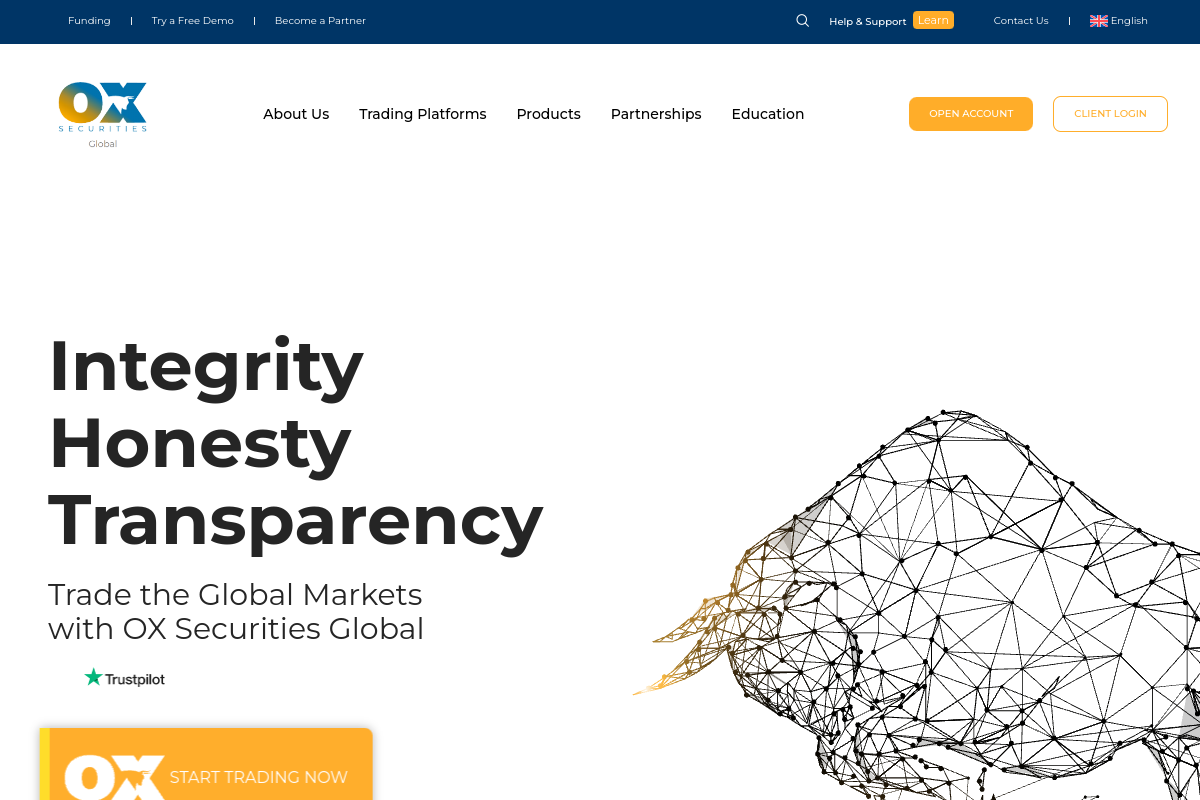
OX Review: Is This Trading Platform a Scam or Legitimate?
In the rapidly evolving landscape of digital finance and online trading, new platforms emerge with startling frequency. Among these, the brand OX—specifically associated with OX Share and its various digital iterations—has garnered significant attention. As investors seek high-yield opportunities, the primary question remains: Is OX a scam or a legitimate financial service provider? This comprehensive analysis explores the technical, regulatory, and reputational facets of the platform to provide a definitive answer for potential users and cybersecurity enthusiasts.
The digital age has democratized access to markets, but it has also opened the door for sophisticated fraudulent schemes. To determine the legitimacy of OX, we must apply a rigorous cybersecurity and financial audit framework. This involves examining their regulatory standing, technical infrastructure, transparency of operations, and the experiences of their global user base.
Recover Your Funds From Bitcoin, Forex, Binary, and Crypto Brokers. We Specialize in Cases Over $5000. Their experts are ready to help with tracing your lost funds and guide you toward recovery
Understanding the OX Ecosystem
OX positions itself primarily as a multi-asset brokerage and financial services provider. It claims to offer access to Forex, indices, commodities, and cryptocurrencies. For many, the initial appeal of OX lies in its promise of high leverage, low spreads, and a user-friendly interface. However, in the world of online trading, a polished website is often the first layer of a complex operation that requires deeper scrutiny.
From an SEO and search intent perspective, many users arrive at this inquiry after encountering aggressive marketing or social media advertisements. The legitimacy of such platforms is not merely about whether the website functions, but whether the underlying business entity is authorized to handle client funds and whether it adheres to international anti-money laundering (AML) and know-your-customer (KYC) protocols.
Red Flags Analysis: A Cybersecurity Perspective
A professional safety check requires looking beyond the homepage. Here, we break down the critical red flags that cybersecurity analysts look for when evaluating a financial platform like OX.
1. Regulatory Oversight and Licensing
The most significant indicator of a legitimate broker is its regulatory status. Legitimate firms are typically regulated by top-tier authorities such as the Financial Conduct Authority (FCA) in the UK, the Australian Securities and Investments Commission (ASIC), or the Cyprus Securities and Exchange Commission (CySEC).
In the case of OX, the platform often cites registrations in offshore jurisdictions. While being registered in places like St. Vincent and the Grenadines or Mauritius does not automatically equate to a scam, it provides a much lower level of investor protection than top-tier regulators. These offshore zones often lack stringent capital requirements and do not offer the same level of dispute resolution for international clients. This lack of robust regulation is a primary red flag for professional traders.
2. Transparency and Physical Presence
A legitimate financial institution should provide a clear physical address, direct contact methods, and transparent information about its leadership team. During our analysis of OX, we found that while contact information is present, it often points to virtual offices or shared workspaces in regions known for lax financial oversight. The absence of a verifiable corporate history or a known executive board often characterizes high-risk platforms. For an entity handling millions in transactions, anonymity is the enemy of trust.
3. Technical Infrastructure and SSL Certificates
From a technical standpoint, the OX website uses standard SSL encryption, which protects data in transit. However, a secure connection does not mean the business on the other end is honest. Analysts noted that the domain registration for various OX-related URLs is often hidden behind privacy services. Furthermore, the rapid creation of mirror sites or alternative domains to bypass regional blocks is a common tactic used by platforms that operate in a gray area of the law.
4. Withdrawal Policies and “Bonus” Traps
One of the most common complaints in the “scam review” category involves withdrawal issues. OX, like many offshore brokers, often offers lucrative deposit bonuses. While these look like free money, they frequently come with hidden terms and conditions that require an impossible volume of trades before any funds—including the user’s original deposit—can be withdrawn. This “bonus trap” is a hallmark of platforms designed to retain client capital indefinitely.
User Reviews and Community Sentiment
To provide an objective verdict, we aggregated data from various independent review platforms, including Trustpilot, Forex Peace Army, and dedicated cybersecurity forums. The feedback for OX is highly polarized, which is itself a warning sign.
- Positive Reviews: Often highlight the ease of use and the quick setup process. However, cybersecurity analysts note that many of these reviews appear to be incentivized or generated by bot accounts, characterized by generic language and repetitive praise.
- Negative Reviews: These are more detailed and concerning. Frequent themes include “slippage” (where trades are executed at worse prices than expected), sudden account freezes, and a complete lack of response from customer support once a withdrawal request is initiated.
- Social Media Sentiment: On platforms like Reddit and X (formerly Twitter), users have flagged OX for “pump and dump” signals or aggressive recruitment tactics that resemble multi-level marketing (MLM) schemes rather than traditional brokerage services.
The Security Audit: How to Protect Yourself
When engaging with any platform like OX, users should perform their own safety checks. A cybersecurity analyst would recommend the following steps before depositing any capital:
- Check the Domain Age: Use WHOIS tools to see how long the site has been active. Scams usually have very young domains (under one year).
- Verify License Numbers: If a site claims to be regulated, go directly to the regulator’s website and search for the license number. Do not trust the link provided on the broker’s site.
- Test the Support: Ask technical questions about their liquidity providers and data encryption. Vague or circular answers are a sign of a non-professional operation.
- Start Small: Never deposit more than you are willing to lose, and attempt a small withdrawal early on to test the platform’s integrity.
Final Verdict: Is OX a Scam or Legit?
After a deep dive into the OX ecosystem, the verdict is nuanced but leans heavily toward caution. While OX may not be a “hard” scam in the sense that the website is a total fiction, it functions as a high-risk, offshore brokerage that lacks the necessary protections for the average investor.
The combination of offshore registration, reports of withdrawal difficulties, and aggressive marketing tactics places OX in a category that cybersecurity experts generally advise against. For those seeking a safe trading environment, the lack of transparency regarding their physical headquarters and the absence of top-tier regulatory oversight are deal-breakers.
Verdict: OX is characterized as high-risk. It exhibits several characteristics common in the “scam-adjacent” financial sector. While some users may have successfully traded on the platform, the structural lack of accountability means that if your funds disappear or your account is frozen, you will have virtually no legal recourse. Legitimate alternatives with FCA or ASIC regulation are widely available and provide the security that OX currently lacks.
Investors are strongly encouraged to prioritize security over the lure of high leverage and bonuses. In the world of online finance, if a deal looks too good to be true, it almost certainly is. Always conduct your own due diligence and consult with a certified financial advisor before committing funds to platforms that operate outside of established legal frameworks.
By maintaining a high standard of digital hygiene and skepticism, you can protect your assets from the myriad of risks present in the modern financial web. OX serves as a reminder that in the absence of regulation, the burden of security falls entirely on the consumer.
Leave a Reply